

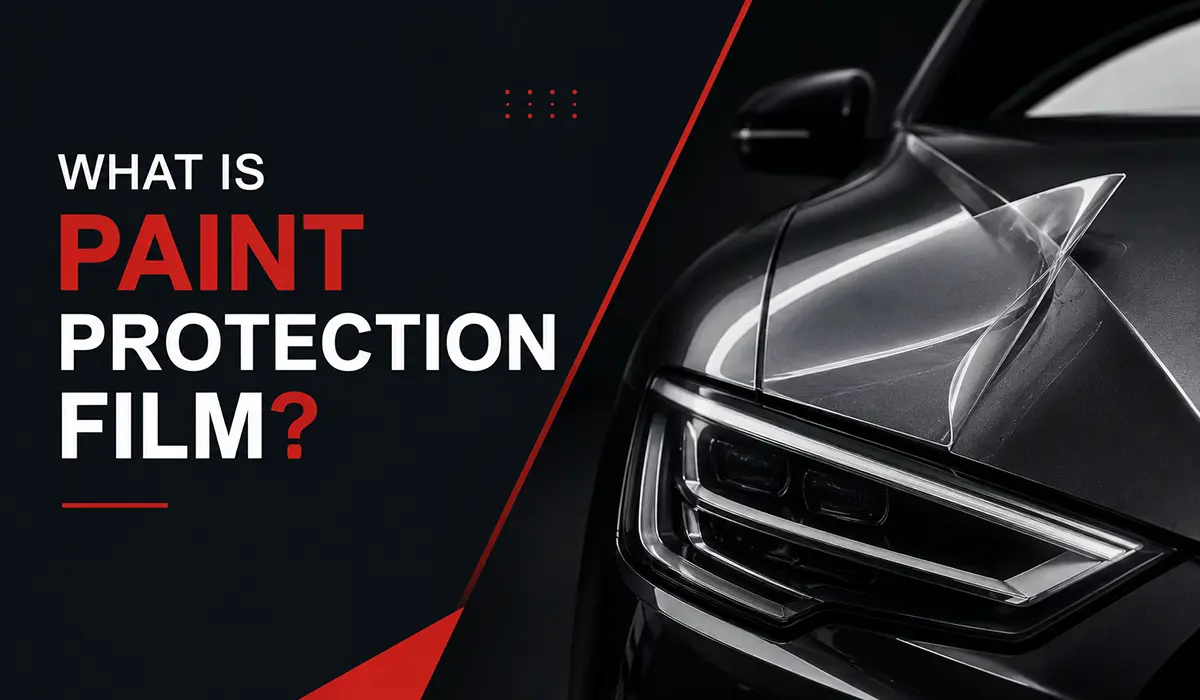
Paint protection film, often called a clear bra, is a thin, transparent urethane film that installers apply over your vehicle’s painted surfaces to shield them from rock chips, scratches, and road damage. It is optically clear, so it protects the paint without changing how your car looks. The film is thick enough to absorb impacts that would otherwise chip or scratch your clear coat, and most quality films are self-healing, meaning light scratches disappear on their own with a little heat from the sun or warm water.
In a place like Calgary, where highway gravel and winter road debris are a constant threat to your front end, paint protection film is the strongest defence you can put on your paint. Here is how it works, what it covers, and whether it is worth it for your vehicle.
What Paint Protection Film Actually Is
Paint protection film is a thermoplastic polyurethane (TPU) layer, usually 6 to 8 mils thick, that bonds directly to your painted panels. It is flexible enough to wrap around curves, mirrors, and edges, and clear enough that most people cannot tell it is there.
The film is built in layers. A tough top coat handles scratches and self-healing, the urethane middle layer absorbs and spreads out impact energy, and an adhesive layer bonds it to your paint. Together, those layers take the punishment that would normally reach your clear coat.
The technology is not new. Paint protection film was first developed to protect military helicopter rotor blades, then moved into motorsports, and reached everyday drivers in the 1990s. Today’s films from brands like XPEL, 3M, SunTek, and STEK are far clearer and tougher than the early versions.
Why Is It Called a Clear Bra?
The nickname comes from the early days, when the film was mostly applied as a small patch across the front bumper and the leading edge of the hood, roughly where a car bra would sit. That front-end patch looked like an invisible bra, so people started calling it a clear bra. The name stuck, even though film now covers far more than just the nose of the car.
Clear bra, paint protection film, PPF, and protective film all mean the same thing.
What Does Paint Protection Film Protect Against?
The film is built to take physical and environmental abuse so your paint does not have to. It defends against:
- Rock chips and gravel spray, the biggest paint threat on Calgary highways
- Bug splatter and bird droppings, which can etch bare paint
- Light scratches and swirl marks from washing and daily contact
- Road salt and winter grime
- UV rays that fade and oxidize clear coat over time
- Minor abrasions from door edges, loading, and parking
It will not stop a deep gouge, a dent, or a hard collision. What it does is absorb the everyday hits that slowly wear paint down and cause the chips you see on most older front bumpers.
How Does Self-Healing Work?
This is the feature that surprises most people. Premium paint protection film is made from an elastomeric urethane that can repair its own light scratches. When the film gets warm, from sunlight, warm water, or even the heat from your hand, the polymers relax back into their original shape and the fine scratch disappears.
It is worth being clear about the limit. Self-healing works on light surface scratches and swirl marks. It does not repair deep cuts, punctures, or gouges that go through the film. For everyday scuffs, though, it means your car keeps looking clean without any effort from you.
Where Is the Film Applied? Coverage Options
You can protect just the high-impact areas or the whole car. The common coverage levels are:
Partial front. Bumper, part of the hood, and mirrors. The budget entry point. One thing to know: a partial hood leaves a visible line across the paint where the film stops, and dirt tends to collect along that edge over time.
Full front. Full bumper, full hood, fenders, mirrors, and often headlights and A-pillars. This is the most popular choice because it covers the whole area that takes gravel hits, with no line across the hood.
Full vehicle wrap. Every painted panel is covered. The highest level of protection, usually chosen for luxury, exotic, or long-term keeper vehicles.
Many drivers also add film to rocker panels, door edges, door handles, and the rear wheel arch areas, since those spots pick up chips and scratches too.
How Long Does Paint Protection Film Last?
Quality paint protection film lasts 5 to 10 years, and premium films typically last 7 to 10 years with proper care. Top brands carry manufacturer warranties, often up to 10 years, against yellowing, cracking, peeling, and bubbling.
How long yours lasts depends on the film quality, sun exposure, how you wash it, and the climate. Cheap off-brand films can yellow or haze early, which is one of the main reasons the film brand and the installer matter so much.
What Does It Cost in Calgary?
Paint protection film pricing is driven more by coverage and installation complexity than by the size of your car. As a general guide:
- Partial front: roughly $500 to $1,000
- Full front: often around $1,500
- Full vehicle wrap: roughly $5,000 to $8,000+, more for exotics and large or complex vehicles
The film is precision cut to your vehicle’s exact make and model, then hand fitted, so the labour and the installer’s skill are a big part of the price. Cheaper is not better here. A rushed or unskilled install leads to lifted edges, trapped dust, and peeling.
Paint Protection Film vs Ceramic Coating
This is the most common question, and the honest answer is that they do different jobs. If you are weighing your options, see how PPF compares to ceramic coating before you decide.
- Paint protection film is physical armour. It absorbs rock chips and impacts. Think of it like an invisible screen protector for your paint.
- Ceramic coating is a chemical shield. It adds gloss, blocks UV, resists chemicals, and makes washing easier, but it cannot stop a rock chip.
Neither replaces the other. Many Calgary drivers get the best result by putting film on the high-impact front end and a ceramic coating over the rest of the car, or even a ceramic coating on top of the film. Film handles the impacts, ceramic handles the salt, chemicals, and shine.
If you want the full comparison, see our guide on ceramic coating vs wax and our ceramic coating cost in Calgary breakdown.
Is Paint Protection Film Worth It?
For most Calgary drivers, yes, especially if you plan to keep the car or you care about resale. Here is why it pays off:
- It prevents rock chips that would otherwise cost $500 to $3,000 per panel to repaint
- It keeps your factory paint intact, and vehicles with original paint often sell for 5 to 15 percent more
- It can be removed later without harming the clear coat underneath
- A damaged section can be replaced for far less than repainting a panel
Spread over its lifespan, the cost of the film is usually lower than paying to fix chipped and faded paint down the road.
It makes the most sense on new vehicles, leased vehicles you want to hand back clean, cars driven often on gravel-heavy highways, and any vehicle where the paint matters to you.
Frequently Asked Questions
What is paint protection film?
Paint protection film, also called a clear bra, is a clear urethane film applied over your car’s paint to protect it from rock chips, scratches, bug splatter, and UV damage. It is thick enough to absorb impacts and is usually self-healing, so light scratches fade away with heat.
Why is it called a clear bra?
The name comes from the early days, when the film was applied as a small patch across the front bumper and hood, roughly where a car bra sits. The clear patch looked like an invisible bra, and the name stuck even though the film now covers much more.
Does paint protection film really stop rock chips?
Yes. That is its main job. The urethane film absorbs and spreads out the impact of gravel and stones so the hit does not reach your paint. It will not stop a deep gouge or a dent, but it prevents the everyday chips that damage most front ends.
How long does a clear bra last?
Quality paint protection film lasts 5 to 10 years, with premium films usually lasting 7 to 10 years. Top brands carry warranties up to 10 years against yellowing, cracking, and peeling. Lifespan depends on film quality, sun exposure, and how you care for it.
What is the difference between paint protection film and ceramic coating?
Film is physical protection that absorbs rock chips and impacts. Ceramic coating is a chemical layer that adds gloss and resists UV, salt, and stains but cannot stop a chip. They protect against different things, and many drivers use both together.
Does paint protection film damage your paint?
No, when installed and removed properly. Quality film protects the clear coat and can be safely heated and peeled off later without harming the paint underneath. Poor installation or cheap film is where problems come from, which is why the installer matters.
Can you wash a car with paint protection film?
Yes. Hand washing and touchless washes are best. Avoid automatic brush washes, since high-pressure jets and stiff brushes can lift the film edges over time. Gentle, regular washing keeps the film clear and performing.
Is paint protection film worth it in Calgary?
For most drivers, yes. Calgary’s highway gravel and winter road debris chip paint quickly, and repainting panels is expensive. Film prevents that damage, preserves resale value, and can be removed later, so it usually pays for itself over the life of the car.
Protect Your Paint in Calgary
If gravel and road debris are chipping your front end, paint protection film is the answer. Our team fits precision-cut film to your exact vehicle in a clean, controlled space, and we walk you through the coverage that fits your driving and budget before we start.